 Team Hello Vizag
An Andhra University study has found microplastic contamination in commercially important fish caught off the Visakhapatnam coast.
Researchers examined anchovies and ribbonfish collected from Visakhapatnam Harbour.
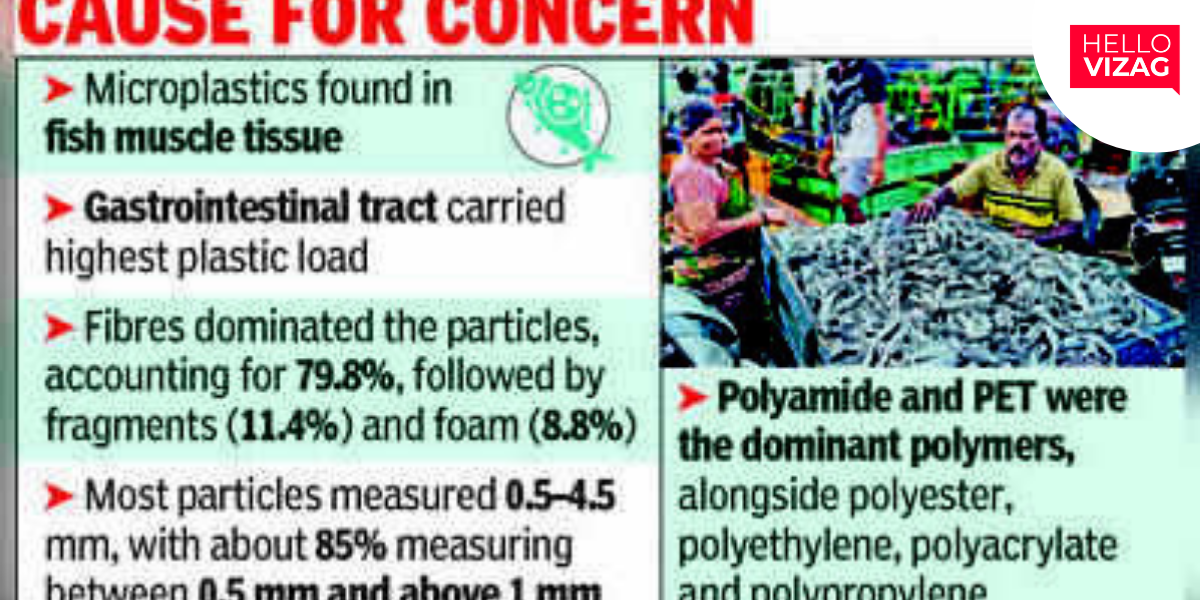
Microplastics were detected in the fish’s gastrointestinal tracts, gills and muscle tissue.
The highest concentration was found in the gastrointestinal tract, followed by the gills and muscle.
The detection of particles in edible muscle tissue indicates a potential route of human exposure through seafood consumption.
However, the researchers said further assessment is needed to determine the implications for human health.
Plastic fibres accounted for nearly 80% of the particles detected in the study.
Fragments and foam were also identified, with most particles measuring between 0.5 mm and 4.5 mm.
Researchers identified polymers including polyamide, PET, polyester, polyethylene, polyacrylate and polypropylene.
Possible sources of marine plastic pollution include sewage, urban runoff, industrial waste, fishing activity, tourism and river inflows.
The study also found microplastics in fish gills, highlighting another route through which marine organisms encounter plastic particles.
The researchers called for better disposal and treatment of plastic waste to reduce contamination of marine ecosystems.
The findings underline the need for continued monitoring of microplastics in Vizag’s coastal waters and seafood.