 Team Hello Vizag
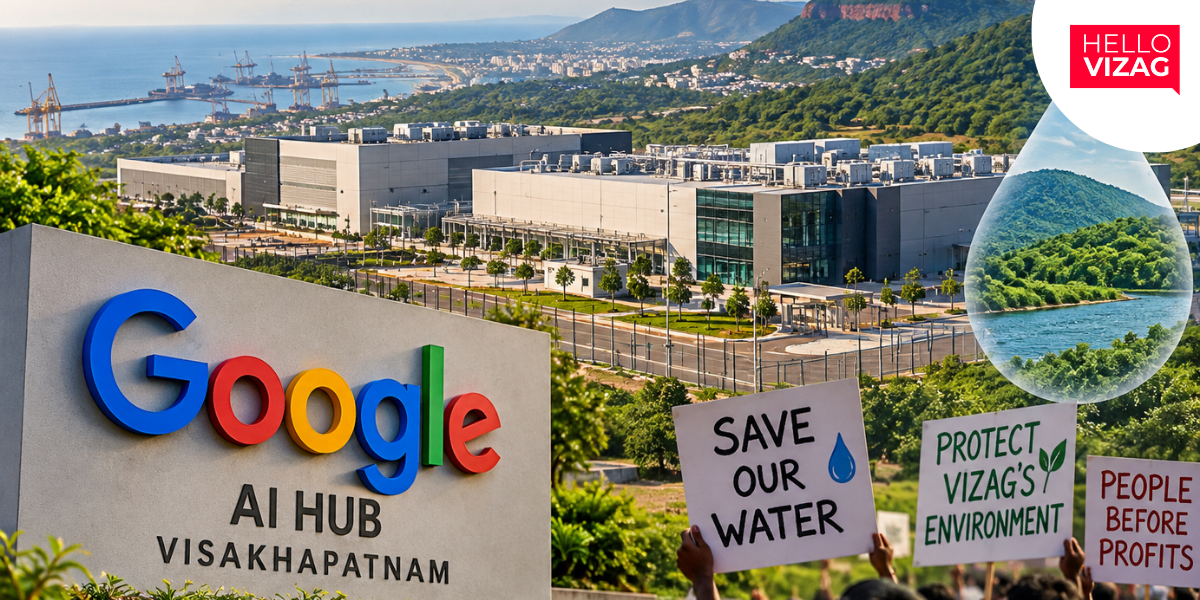
Google’s $15 billion AI hub in Visakhapatnam is facing growing public scrutiny as the company responds to concerns about water resources, environmental risks and land-related disputes surrounding the project.
According to a report published by Business Standard on October 12, 2026, Alexander Smith, Google’s head of infrastructure and energy for Asia-Pacific, said the company assessed the local watershed before selecting its cooling technology. The assessment indicated pressure on local water resources, prompting Google to opt for air cooling rather than conventional water-based cooling systems.
The project forms part of Google's planned investment of $15 billion in India between 2026 and 2030. The AI hub near Visakhapatnam is expected to include large-scale data-centre infrastructure and strengthen India's digital connectivity. The company has said the investment will support the expansion of AI computing capacity and related digital infrastructure.
Despite these plans, residents and environmental activists have raised concerns about the project's potential impact on freshwater availability, electricity demand, nearby ecosystems and local communities. Questions have also been raised about land acquisition and the project's proximity to Kambalakonda Wildlife Sanctuary. Legal challenges concerning environmental clearances and the project site have added to the scrutiny.
Google has stated that it conducts environmental assessments before projects begin and has outlined plans related to water replenishment, clean energy and power infrastructure. However, concerns among local residents and campaigners remain, keeping the balance between large-scale technology investment and environmental protection at the centre of the debate.
The project is expected to be a major addition to Andhra Pradesh's technology infrastructure, but its long-term impact will depend on how resource management, environmental safeguards and community concerns are addressed.