 Team Hello Vizag
As Diwali approaches, the traditional pottery lanes of Visakhapatnam are witnessing a gradual disappearance of an age-old craft. Generations of local artisans who once produced thousands of earthen lamps, clay vessels and traditional festive items are now struggling to sustain their livelihoods.
In areas such as Kummari Veedhi near Dondaparthi and Jagadamba, pottery was once a family occupation passed down from one generation to another. Today, only a small number of elderly artisans continue practising the craft as younger family members move towards other professions.
Elderly Artisans Keep the Tradition Alive
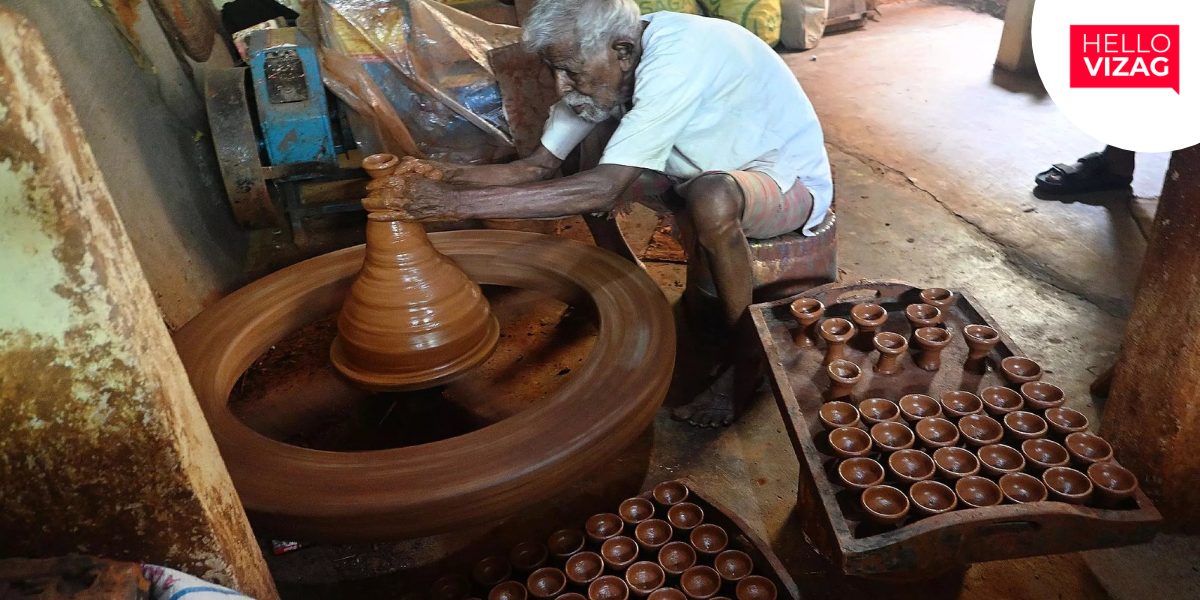
One of the remaining traditional potters is Srikakulam Paradesi, aged around 94, who continues making clay diyas using a traditional potter's wheel.
Despite his age, he continues working to preserve the family tradition and prepare earthen lamps for the festive season.
However, the future of the craft remains uncertain as fewer young people are willing to take up pottery as a full-time occupation.
Uncertain Income Drives Younger Generations Away
Local artisans say pottery requires years of experience, physical effort and considerable time, while the financial returns remain unpredictable.
S. Papa Rao, a clay artisan, said he would not encourage younger family members to depend entirely on pottery because of the uncertain income and better employment opportunities available elsewhere.
Rising raw-material and transportation costs, damaged products and customer bargaining have further reduced the earnings of traditional potters.
Markets Increasingly Depend on Outside Supplies
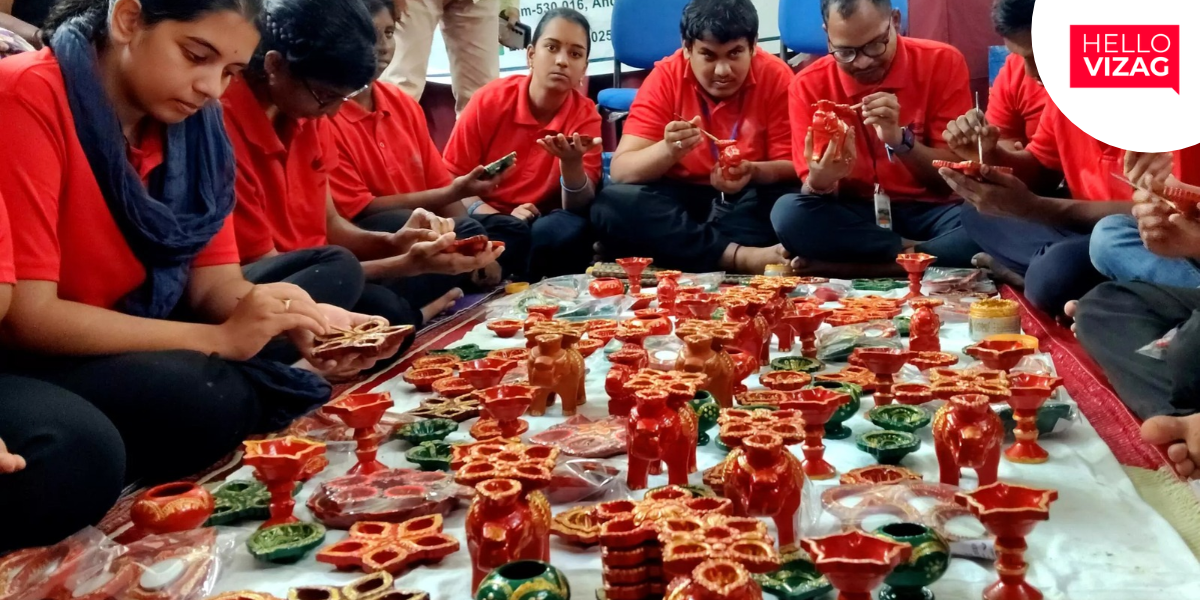
The changing pottery industry is also visible in Visakhapatnam's Diwali markets.
Many festive clay products are now brought into the city from Tamil Nadu, Rajasthan, Gujarat, Vijayawada and Rajamahendravaram.
Local sellers face competition from outside suppliers, while traditional products such as handmade clay flowerpots and casings used for certain traditional firecrackers have become increasingly uncommon.
Changing Lifestyles Affect Traditional Diwali Celebrations
Older residents recall a time when Kummari Veedhi became a busy marketplace before Diwali, with families preparing earthen lamps and traditional festive products weeks in advance.
Today, decorative electric lights, changing urban lifestyles and commercially manufactured products have reduced the demand for several traditional handmade items.
The disappearance of traditional pottery is therefore not just an economic concern but also a cultural loss for Visakhapatnam.
Preserving a Traditional Craft
The survival of local pottery depends on creating better livelihood opportunities for artisans, encouraging younger generations to learn the craft and supporting the sale of locally made products.
As elderly potters continue their work, their efforts serve as a reminder of Visakhapatnam's traditional craftsmanship and the importance of preserving cultural occupations.